Choosing the Right Support Spacing for Long Pipeline Runs
Author:Mingde Time:2026-01-05 10:40:46 Click:131
When designing and installing pipeline systems, choosing the right support spacing is crucial, especially for long pipeline runs. Improper support spacing can lead to excessive sagging, vibration, and even pipe failure, making it essential to adhere to best practices in selecting pipe support systems. This article explores the factors that influence support spacing decisions, the role of pipe support systems in ensuring the longevity and safety of pipeline infrastructures, and how manufacturers can optimize these systems for large-scale projects.
Understanding Pipe Support Systems
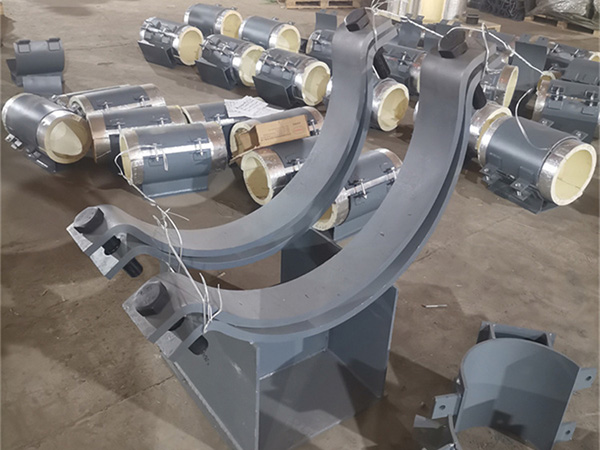
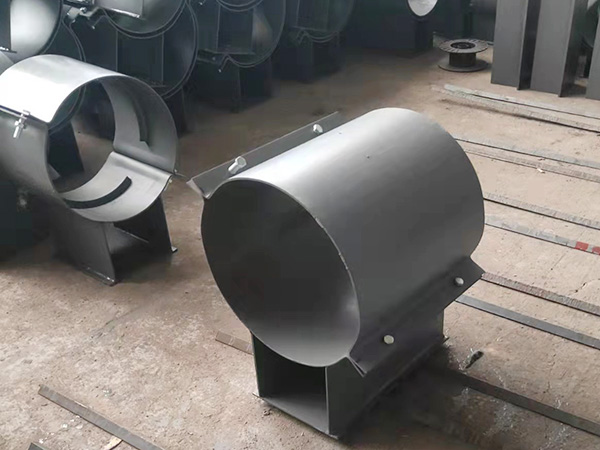
Pipe support systems are designed to anchor, support, and guide pipelines in a way that prevents stress and deformation. These systems play a vital role in managing thermal expansion, vibrations, and other mechanical forces that affect pipelines over time. For long pipeline runs, selecting the right support spacing ensures that the pipeline remains structurally sound and able to withstand the various stresses encountered throughout its operational life.
The key goal of a pipe support system is to maintain proper alignment and prevent unwanted movement. This helps reduce the risk of damage to the pipeline and associated infrastructure, improving both performance and safety.
Factors Affecting Support Spacing in Long Pipelines
1. Pipe Diameter and Weight
The diameter and weight of a pipeline are primary considerations when determining the appropriate support spacing. Larger pipelines require stronger, more frequent supports to handle the increased weight and structural load. Conversely, smaller pipelines might have more flexibility, allowing for wider spacing between supports.
Manufacturers often rely on customized pipe support solutions tailored to the specific needs of each pipeline. For instance, heavier pipes made from dense materials may require shorter support spacing to prevent sagging or misalignment, which can lead to operational inefficiencies or safety hazards.
2. Thermal Expansion and Contraction
Temperature changes can cause pipelines to expand and contract. The thermal expansion of materials must be considered when determining support spacing. Long pipelines are especially susceptible to temperature fluctuations due to their extended length, which can result in significant expansion or contraction over time. Pipe support systems are designed to accommodate these movements, ensuring the pipeline can expand freely without excessive stress or deformation.
To manage thermal movements effectively, pipe support manufacturers often use specially designed supports that can allow for pipe expansion while also maintaining structural integrity.
3. Pipeline Material and Corrosion Resistance
Different materials exhibit varying degrees of flexibility and resistance to environmental factors such as corrosion. For pipelines running through harsh environments, corrosion-resistant materials are used to ensure longevity and performance. Corrosion-resistant supports and insulated brackets are often used to protect pipelines from environmental damage and ensure the spacing remains stable over time.
In the case of pipe support systems for corrosion-prone applications, the choice of material can influence the required support spacing to maintain durability.
4. Vibration and Mechanical Stress
In long pipeline runs, vibrations from internal fluids or external factors such as machinery can create additional stress. These vibrations must be accounted for in the support design to prevent fatigue damage. Pipe support systems are often equipped with anti-vibration features to absorb and dampen the forces that might otherwise affect the structural integrity of the pipeline.
5. Environmental Conditions
Environmental conditions such as wind, seismic activity, or extreme weather can impact the effectiveness of support spacing. For pipelines that are exposed to dynamic external forces, additional supports may be needed to prevent displacement or damage. For instance, offshore pipelines may require more frequent supports due to the added stress from ocean waves and currents.
The Role of Manufacturers in Optimizing Pipe Support Spacing
When it comes to long pipeline runs, working with a reliable pipe support manufacturer is key to ensuring that support spacing is optimized for both safety and efficiency. These manufacturers play a crucial role in producing custom solutions that meet the unique demands of each pipeline project.
Production capabilities such as batch supply and the ability to create tailored support systems ensure that the right type of pipe support is used in every situation. Manufacturers with experience in large-scale industrial projects can provide bulk production of high-quality pipe supports that meet industry standards and perform under extreme conditions.
Moreover, manufacturers of pipe supports often provide consulting services to help clients determine the best support design and spacing for their specific pipeline configurations, based on material properties, load-bearing capacity, and expected environmental factors.
Best Practices for Choosing Support Spacing
1. Follow Industry Standards
Adhering to recognized industry standards for pipeline installation is essential. Various codes, such as the ASME B31.3 for process piping and the ASME B31.8 for gas transmission, provide guidelines on pipe support spacing based on the specific application and pipeline characteristics.
2. Customization for Unique Projects
Every pipeline project is unique, and pipe support systems should be tailored to meet the specific requirements of each installation. This includes taking into account the length of the pipeline, type of material, environmental conditions, and expected loads.
3. Regular Inspection and Maintenance
Proper installation is only part of the equation. Regular inspections and maintenance are essential to ensure that support spacing remains optimal throughout the pipeline’s life cycle. Over time, factors like wear and tear, corrosion, and thermal movements can alter the effectiveness of the support system, requiring adjustments or replacements.
4. Use of Advanced Materials and Technologies
Incorporating advanced materials such as composite materials or corrosion-resistant alloys can improve the performance of pipe supports, especially in harsh environments. Insulated pipe supports can also be used to reduce thermal loss and improve energy efficiency.
Conclusion
Choosing the right support spacing for long pipeline runs is a critical factor in ensuring the durability, safety, and efficiency of pipeline systems. By considering factors such as pipe diameter, thermal expansion, environmental conditions, and mechanical stress, engineers and manufacturers can design pipe support systems that meet the unique demands of each project. Partnering with a skilled pipe support manufacturer who can provide tailored solutions and batch production ensures that long pipelines remain operational and structurally sound for the long term.
References
GB/T 7714:Qu W, Zhang H, Li W, et al. Influence of support stiffness on dynamic characteristics of the hydraulic pipe subjected to basic vibration[J]. Shock and Vibration, 2018, 2018(1): 4035725.
MLA:Qu, Wei, et al. "Influence of support stiffness on dynamic characteristics of the hydraulic pipe subjected to basic vibration." Shock and Vibration 2018.1 (2018): 4035725.
APA:Qu, W., Zhang, H., Li, W., Sun, W., Zhao, L., & Ning, H. (2018). Influence of support stiffness on dynamic characteristics of the hydraulic pipe subjected to basic vibration. Shock and Vibration, 2018(1), 4035725.
 Hot Products
 Contact Us
Contact:
Mobile:+86 +86 19133378808
Website:mingdepipe.com
Address: