Advanced Surface Coatings for Long-Life Pipe Clamps
Author:Mingde Time:2026-01-21 19:13:17 Click:182
Why Surface Coatings Matter for Pipe Clamps
Pipe clamps are essential components used to secure pipelines in mechanical, industrial, and construction systems. They support pipe weight, absorb vibration, and maintain alignment under operating loads. However, many failures in piping systems occur not because of clamp design, but because of surface degradation caused by corrosion, chemicals, moisture, and temperature variation.
Advanced surface coatings significantly extend the service life of pipe clamps by forming a protective barrier between the base metal and the surrounding environment. A professional pipe clamp manufacturer understands that durability begins at the surface level, where exposure conditions directly influence performance.
Through controlled factory production, coatings are applied uniformly to ensure consistent thickness, adhesion, and coverage across every clamp supplied in bulk projects.
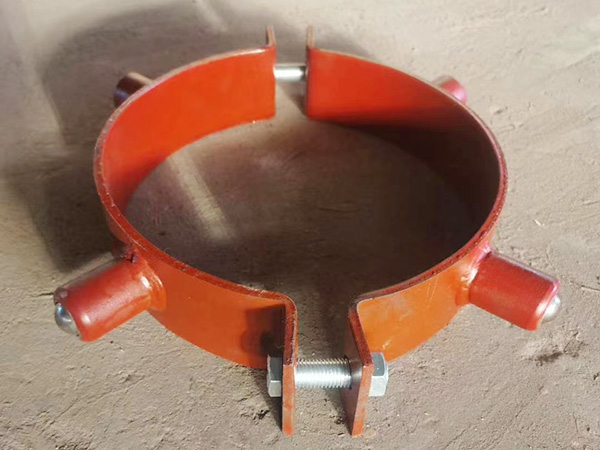
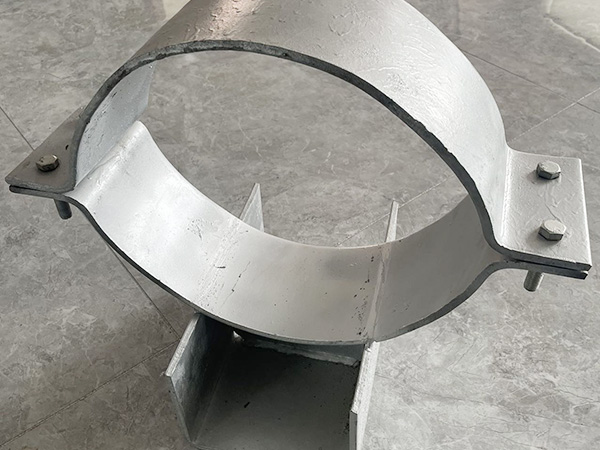
The Role of a Pipe Clamp Manufacturer in Coating Quality
Not all coatings perform equally. The effectiveness of surface protection depends heavily on the production capabilities of the pipe clamp manufacturer. Industrial-scale manufacturers integrate coating systems into their production lines rather than applying them as secondary processes.
This integrated production approach allows precise control of surface preparation, coating chemistry, curing temperature, and adhesion strength. A factory environment also ensures repeatability, which is critical for infrastructure projects that require thousands of identical pipe clamps.
With manufacturer-controlled production, pipe clamps are not only protected against corrosion but also optimized for mechanical stability and long-term reliability in harsh operating conditions.
Common Base Materials Used in Pipe Clamps
Before coatings are applied, the base material of the pipe clamp plays a major role in performance. Most pipe clamps are produced from carbon steel, stainless steel, or alloy steel depending on load and environment.
Carbon steel clamps offer high strength but require effective coating protection to prevent rust. Stainless steel provides inherent corrosion resistance, but surface treatments still improve wear resistance and appearance. Alloy steels are used where vibration and impact loads are high.
A professional pipe clamp manufacturer selects materials compatible with coating systems to ensure proper bonding and long-term performance during production and bulk supply.
Zinc-Based Coatings for Corrosion Protection
Zinc coatings are among the most common surface treatments for pipe clamps. They work through sacrificial protection, meaning zinc corrodes first, protecting the steel beneath it.
Electro-galvanizing produces smooth finishes suitable for indoor applications, while hot-dip galvanizing creates thicker layers for outdoor and marine environments. These coatings protect pipe clamps from moisture, salts, and atmospheric corrosion.
Through automated factory production, zinc layers are applied with controlled thickness to prevent cracking, peeling, or uneven coverage, ensuring every clamp performs consistently in service.
Polymer and Composite Coating Technologies
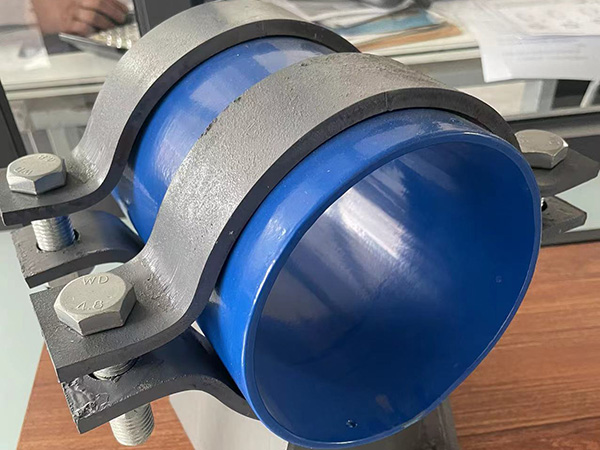
Beyond metal coatings, modern pipe clamps increasingly use polymer and composite coatings. These include epoxy, polyester powder coating, and hybrid polymer films that provide both chemical resistance and mechanical durability.
Polymer coatings protect pipe clamps against acids, alkalis, oils, and temperature fluctuations. They also reduce friction and noise in vibrating piping systems.
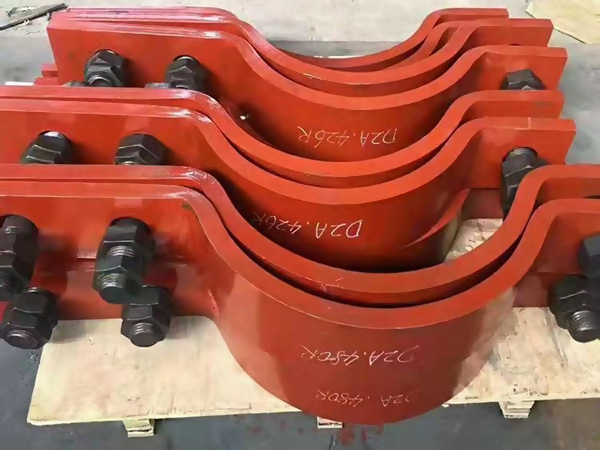
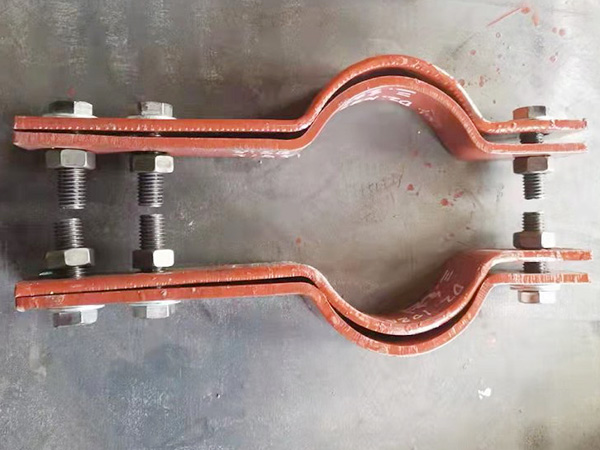
A professional pipe clamp manufacturer integrates powder coating systems into production lines to achieve uniform curing and strong adhesion. Factory bulk supply ensures that coated clamps maintain color consistency, thickness stability, and long-term protective performance.
Thermal and Chemical Resistance Performance
Industrial pipe systems often operate under elevated temperatures and chemical exposure. Surface coatings must resist cracking, blistering, and chemical attack over time.
Advanced coatings for pipe clamps are engineered to withstand thermal cycling without losing adhesion. Chemical-resistant coatings prevent penetration of corrosive substances into the base metal, extending service life even in aggressive environments such as petrochemical plants or wastewater facilities.
Through manufacturer-controlled production testing, coated pipe clamps are validated for resistance against temperature variation, humidity, and chemical exposure before bulk shipment from the factory.
Production Control and Inspection in Factory Supply
High-quality surface coatings depend on strict production control. Before coating, pipe clamps undergo cleaning, degreasing, and surface roughening to ensure adhesion. After coating, curing and cooling stages stabilize the protective layer.
Inspection methods include thickness measurement, adhesion testing, and visual inspection for defects. These steps guarantee that coated pipe clamps meet durability standards before leaving the factory.
A professional pipe clamp manufacturer uses traceable production systems to ensure that every clamp in bulk supply orders delivers consistent protection and mechanical performance in the field.
Applications of Coated Pipe Clamps in Industry
Advanced coated pipe clamps are widely used across many industries. In construction, they support HVAC and plumbing systems exposed to moisture. In oil and gas, coated clamps resist corrosion and vibration. In chemical processing, polymer-coated clamps withstand aggressive media.
Power generation, marine engineering, and water treatment facilities also depend on long-life pipe clamps to maintain safe and stable pipeline networks. Manufacturer production and factory bulk supply allow these industries to deploy uniform clamp systems for large-scale projects.
Conclusion: Choosing Long-Life Pipe Clamps
Advanced surface coatings are essential for extending the service life of pipe clamps in demanding environments. From zinc galvanizing to polymer composite layers, each coating technology enhances corrosion resistance, chemical stability, and mechanical durability.
By working with a professional pipe clamp manufacturer supported by integrated production systems and reliable factory bulk supply, engineers gain access to consistent quality, predictable performance, and long-term cost efficiency.
Ultimately, long-life pipe clamps are not just fasteners—they are engineered support components designed to protect pipelines, reduce maintenance, and ensure safe operation across industrial, construction, and infrastructure projects.
References
GB/T 7714:Funke W. Problems and progress in organic coatings science and technology[J]. Progress in Organic coatings, 1997, 31(1-2): 5-9.
MLA:Funke, Wi. "Problems and progress in organic coatings science and technology." Progress in Organic coatings 31.1-2 (1997): 5-9.
APA:Funke, W. (1997). Problems and progress in organic coatings science and technology. Progress in Organic coatings, 31(1-2), 5-9.
 Hot Products
 Contact Us
Contact:
Mobile:+86 +86 19133378808
Website:mingdepipe.com
Address: