High-Pressure Pipe Clamp Solutions for Power Generation Systems
Author:Mingde Time:2025-12-03 13:44:43 Click:135
Why the Right Pipe Clamp Manufacturer Matters
Across today’s power generation landscape, from nuclear facilities to gas-fired turbines and large-scale renewable stations, the smallest components often play the biggest roles. Piping networks carry steam, condensate, cooling media, or high-energy fluids under significant pressure. To keep these systems safe and aligned, engineers depend on clamps built to withstand extreme stress.
Because of this, selecting a dependable Pipe Clamp Manufacturer—one that operates true Production lines and supports consistent bulk delivery—is a strategic decision. High-pressure pipe clamps are no longer “simple hardware”; they are engineered supports that directly influence safety margins, maintenance cycles, and system efficiency.
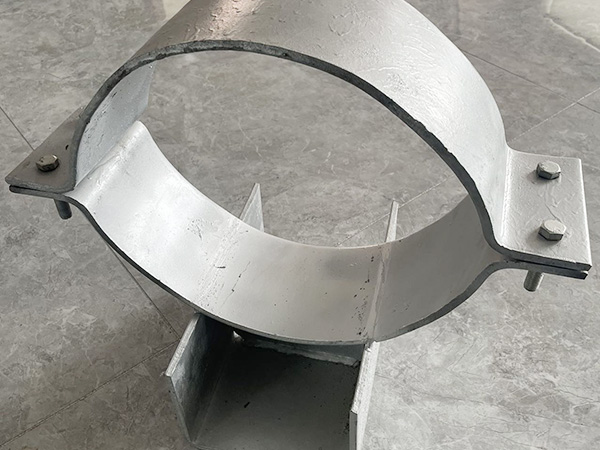

High-Pressure Pipe Clamps: Their Function in Power Generation Systems
Within any power plant, pipes constantly manage dynamic forces. Pumps trigger pulsation, turbines induce vibration, and thermal cycles expand and contract steel lines repeatedly throughout each shift. High-pressure clamps perform four essential roles:
1.Maintain pipe alignment to prevent mechanical loading at connection points
2.Control vibration and reduce metal fatigue from rotating machinery
3.Distribute loads across the pipe wall so no single point absorbs excessive force
4.Improve operational safety, especially where hot, high-pressure fluids are present
In essence, the clamp becomes a structural stabilizer. A poorly designed clamp risks leaks, misalignment, or catastrophic failure—making quality and manufacturer expertise crucial.
Material Development: Stronger, Safer, and More Resilient
As power applications become more demanding, clamp materials have shifted toward higher performance. Several trends stand out:
Stainless and Carbon Steel Variants
Classic grades like 304, 316, and high-strength carbon steels remain popular due to their corrosion resistance and structural integrity. Their performance in boiler loops and cooling water lines is well-documented.
Duplex and Super Duplex Alloys
These alloys are increasingly used in coastal or chemical-heavy environments. They offer exceptional chloride resistance and superior tensile strength—key advantages for desalination facilities and offshore power installations.
Heat-Resistant Alloys for Turbine Areas
Where temperatures soar, nickel-based materials withstand oxidation and creep far better than conventional steels. A capable Pipe Clamp Manufacturer typically provides certification packages detailing exact thermal tolerances.
Production Technology: How Modern Manufacturers Ensure Reliability
High-pressure clamps must meet stringent tolerances and demonstrate consistent structural performance. Today’s advanced manufacturing facilities employ:
·Precision CNC machining for bracket and saddle shaping
·Automated forming and forging to maintain uniform dimensions
·Controlled heat treatment to enhance surface durability and tensile strength
·Digital QC systems that track every part from raw material to final inspection
·Surface finishing processes such as passivation, galvanizing, or heat-resistant coatings
These processes ensure that clamps are not only strong but also predictable across large-scale Production runs—critical for power plant projects that require hundreds or thousands of identical units.
Engineering Design: Built for Extreme Forces
Besides material strength, engineering design defines how a clamp performs over time. Key design considerations include:
Vibration Control Systems
Elastomeric, thermoplastic, or composite inserts absorb the high-frequency vibration typical in turbine halls. Reducing vibration helps prevent fatigue cracks and prolongs pipe lifespan.
Heavy-Duty Multi-Bolt Structures
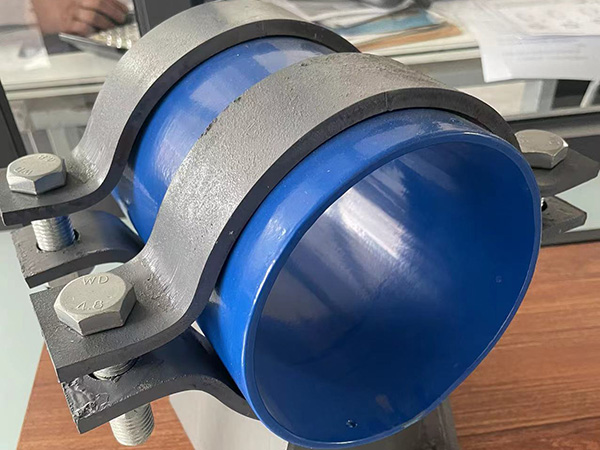
High-pressure environments require clamps that distribute force evenly. Multi-bolt assemblies and reinforced saddle designs ensure safe radial loading even under sudden pressure spikes.
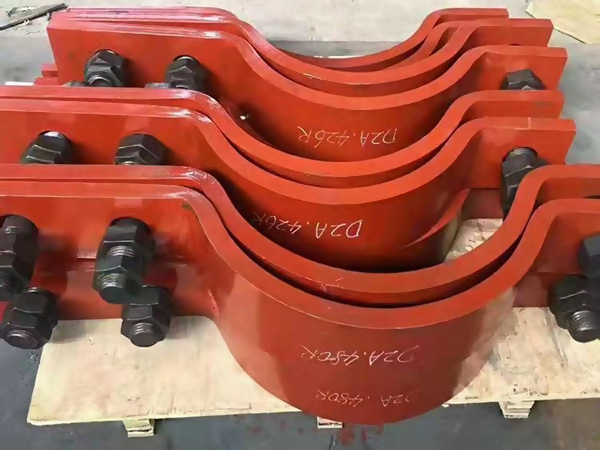

Sliding and Guided Supports
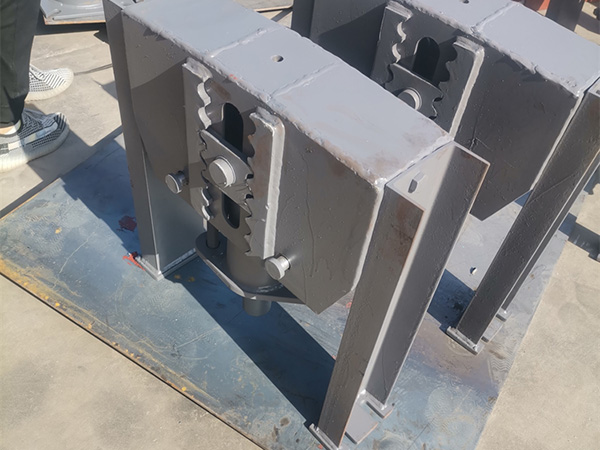
Thermal expansion is a predictable but powerful force. Clamps must allow controlled movement while preventing pipe buckling or misalignment.
High-Temperature Surface Treatments
Coatings that withstand fire or extreme heat protect clamps used in steam lines, exhaust ducts, or turbine casings.
A skilled manufacturer will often offer design iterations or analysis (including finite element modeling) to validate clamp behavior under plant-specific loads.
Sustainability Initiatives in Clamp Manufacturing
The power sector is under increasing pressure to improve environmental responsibility, and clamp production is evolving with it. Many manufacturers now incorporate:
·Recycling of steel offcuts and alloy scraps
·Energy-efficient furnaces and forming equipment
·Reduced-waste machining strategies
·Eco-friendly coating alternatives
·Digital planning to minimize resource use
These sustainable production practices not only reduce environmental impact but also enhance long-term cost efficiency for the buyer.
Procurement Guidelines: Choosing the Right Supplier
When selecting a high-pressure clamp supplier, procurement teams should evaluate:
·Whether the supplier is a true Pipe Clamp Manufacturer (not a trading intermediary)
·Scalable Production capability for bulk orders
·Consistency in material certification and testing documentation
·Lead-time accuracy and logistics reliability
`Ability to customize clamps for unique plant layouts or extreme conditions
These criteria ensure project safety and schedule efficiency while minimizing lifetime maintenance costs.
Conclusion — Pipe Clamp Manufacturer as a Strategic Partner in Power Generation
High-pressure pipe clamps are essential for the health and stability of modern power generation infrastructure. A capable Pipe Clamp Manufacturer—with strong Production capability, technical expertise, and reliable bulk supply—plays a major role in ensuring safe, efficient, and uninterrupted energy operations. As plants continue to advance technologically, the quality of these seemingly small components becomes increasingly vital to long-term performance and sustainability.
References
GB/T 7714:Cavalheiro F N, Cabaleiro M, Conde B, et al. Clamp-based steel connections for structural reusability: Experimental and finite element analysis in the elastic range[C]//Structures. Elsevier, 2025, 75: 108767.
MLA:Cavalheiro, Fernando Nunes, et al. "Clamp-based steel connections for structural reusability: Experimental and finite element analysis in the elastic range." Structures. Vol. 75. Elsevier, 2025.
APA:Cavalheiro, F. N., Cabaleiro, M., Conde, B., & Bouzas, Ó. (2025, May). Clamp-based steel connections for structural reusability: Experimental and finite element analysis in the elastic range. In Structures (Vol. 75, p. 108767). Elsevier.
 Hot Products
 Contact Us
Contact:
Mobile:+86 +86 19133378808
Website:mingdepipe.com
Address: