How a Pipeline Insulation Bracket Factory Controls Material Quality
Author:Mingde Time:2026-02-16 21:46:12 Click:57
In modern pipeline engineering, insulation brackets are essential components that support insulated pipes while maintaining thermal efficiency and structural stability. Behind every reliable bracket is a professional Pipeline Insulation Bracket Factory that manages strict material control throughout the entire manufacturing process.
For any experienced manufacturer, material quality is the foundation of performance. From raw steel selection to surface protection, a pipeline insulation bracket factory integrates quality inspection into each stage of production to ensure every unit meets industrial expectations before bulk supply.
This article explains how factory manufacturing systems control material quality and why this process matters for long-term pipeline insulation performance.
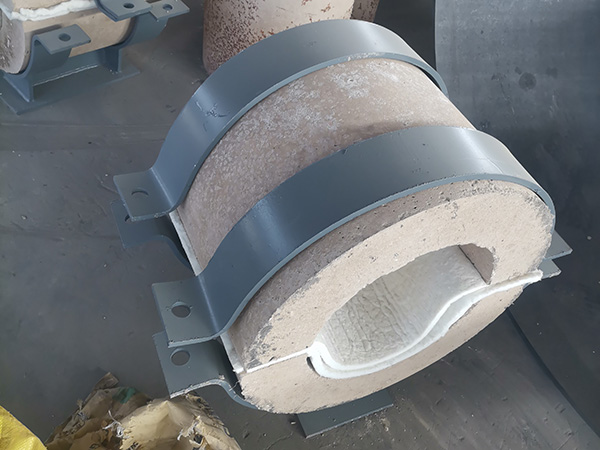

The Role of Material Quality in Pipeline Insulation Brackets
Pipeline insulation brackets are exposed to load stress, temperature variation, moisture, and sometimes corrosive environments. If materials are unstable, even advanced designs will fail.
Material quality directly affects:
·Load-bearing capacity
·Thermal stability
·Corrosion resistance
·Service life
·Installation safety
A professional pipeline insulation bracket factory understands that controlling materials at the source reduces defects, lowers lifecycle cost, and improves reliability across mass production.
Step 1: Supplier Evaluation and Material Sourcing
Material control starts long before production begins.
In a pipeline insulation bracket factory, manufacturers establish sourcing systems that include:
·Supplier audits
·Chemical composition verification
·Mechanical property testing
·Certification traceability
Carbon steel, stainless steel, and alloy materials are evaluated for strength, toughness, and environmental compatibility. Factory purchasing teams work closely with verified suppliers to ensure consistency across large-volume manufacturing.
By controlling input materials, the manufacturer protects the stability of bulk production from the first step.
Step 2: Incoming Material Inspection
Once materials arrive at the factory, incoming inspection becomes critical.
A professional pipeline insulation bracket factory performs:
·Visual defect inspection
·Dimensional checks
·Hardness testing
·Surface condition evaluation
Each batch receives identification labels for traceability. This ensures that if issues appear later, production teams can trace them back to the original source.
Incoming inspection prevents unqualified material from entering factory manufacturing lines and protects downstream processes.
Step 3: Material Storage and Handling Control
Even qualified materials can degrade if improperly stored.
Pipeline insulation bracket factories manage:
·Climate-controlled storage areas
·Separation of different material grades
·Anti-corrosion protection
·FIFO inventory management
Proper storage avoids oxidation, contamination, and mechanical damage before production begins. For manufacturers supplying in bulk, controlled warehousing supports consistent quality across extended project timelines.
Step 4: Processing Control During Production
During factory production, materials undergo cutting, forming, machining, and sometimes welding. Each step influences material performance.
Key production controls include:
·Laser or stamping accuracy
·Bending radius management
·Heat input control during welding
·Distortion prevention
A pipeline insulation bracket factory uses calibrated machinery and trained operators to protect material properties. Excessive heat, incorrect forming angles, or uneven stress distribution can reduce structural strength.
By controlling processing conditions, manufacturers ensure that material performance remains stable throughout factory manufacturing.
Step 5: Heat Treatment and Stress Management
Some insulation brackets require heat treatment to improve strength and reduce internal stress.
In factory production, heat treatment may include:
·Normalizing
·Stress relieving
·Tempering
·Controlled cooling
These processes improve load resistance and dimensional stability. A professional pipeline insulation bracket factory monitors furnace temperature, timing, and cooling speed to protect the microstructure of the material.
This step is essential for brackets used in high-load or temperature-sensitive pipeline systems.
Step 6: Surface Protection and Corrosion Control
Material quality is not only about internal strength but also about surface durability.
Pipeline insulation bracket factories apply surface treatments such as:
·Hot-dip galvanizing
·Electroplating
·Powder coating
·Passivation
Before coating, materials are cleaned and prepared to ensure adhesion. Factory production lines measure coating thickness and uniformity to protect against corrosion, moisture, and chemical exposure.
Good surface protection allows insulation brackets to maintain performance in harsh environments and supports long-term bulk supply reliability.
Step 7: Quality Testing and Verification
After processing, final testing ensures material integrity.
A pipeline insulation bracket factory conducts:
·Load testing
·Dimensional inspection
·Surface finish evaluation
·Coating adhesion checks
·Assembly verification
Batch testing verifies consistency across mass production. Manufacturer quality teams document results to ensure that only qualified products move to packaging and shipment.
This structured quality verification supports trust between factory suppliers and industrial buyers.
Step 8: Traceability and Documentation Systems
Traceability is an important part of material quality control.
Professional factories implement:
·Batch numbering
·Process records
·Material certificates
·Inspection reports
These systems allow manufacturers to track every bracket from raw material to final bulk supply. Traceability improves accountability and simplifies project audits for infrastructure and energy pipeline projects.
Automation and Digital Quality Management
Modern pipeline insulation bracket factories increasingly use automation and digital monitoring.
Benefits include:
·Real-time process tracking
·Reduced human error
·Consistent production cycles
·Predictive quality management
Digital manufacturing systems help manufacturers maintain stable quality even when scaling factory production for large orders.
Why Material Control Matters for Buyers
For buyers and engineers, choosing a supplier with strong material control delivers:
·Longer service life
·Reduced maintenance
·Safer installations
·Stable bulk supply
·Lower total cost
A pipeline insulation bracket factory that controls material quality protects project schedules and performance expectations.
Conclusion: Quality Starts Inside a Pipeline Insulation Bracket Factory
In conclusion, the performance of every insulation bracket begins inside a professional Pipeline Insulation Bracket Factory. From supplier evaluation and incoming inspection to controlled processing, surface protection, and final testing, material quality is managed throughout the entire production workflow.
By combining advanced factory manufacturing systems with strict quality control, a pipeline insulation bracket manufacturer ensures reliable bulk supply for pipeline insulation projects across construction, energy, and infrastructure sectors.
Choosing a factory that controls its materials is the key to building pipeline systems that remain safe, efficient, and durable for years to come.
References
GB/T 7714:Ashby M F, Cebon D. Materials selection in mechanical design[J]. Le Journal de Physique IV, 1993, 3(C7): C7-1-C7-9.
MLA:Ashby, Michael F., and David Cebon. "Materials selection in mechanical design." Le Journal de Physique IV 3.C7 (1993): C7-1.
APA:Ashby, M. F., & Cebon, D. (1993). Materials selection in mechanical design. Le Journal de Physique IV, 3(C7), C7-1.
 Hot Products
 Contact Us
Contact:
Mobile:+86 +86 19133378808
Website:mingdepipe.com
Address: