Inside a Pipe Clamp Factory: From Raw Material to Finished Clamp
Author:Mingde Time:2026-01-31 10:20:42 Click:157
A professional Pipe Clamp Factory is much more than a simple workshop. It is a highly organized manufacturing environment where raw materials are transformed into precision-engineered components used in construction, industrial piping, HVAC, energy, and infrastructure projects. Pipe clamps support, secure, and align pipelines, making them critical for safety and long-term system stability.
With advanced manufacturer production systems and factory batch supply capability, modern pipe clamps are produced with strict control over material quality, forming accuracy, surface treatment, and mechanical performance. Understanding what happens inside a pipe clamp factory helps engineers, contractors, and buyers evaluate product reliability beyond surface appearance.
This article takes you through the journey from raw material to finished clamp inside a professional pipe clamp factory.
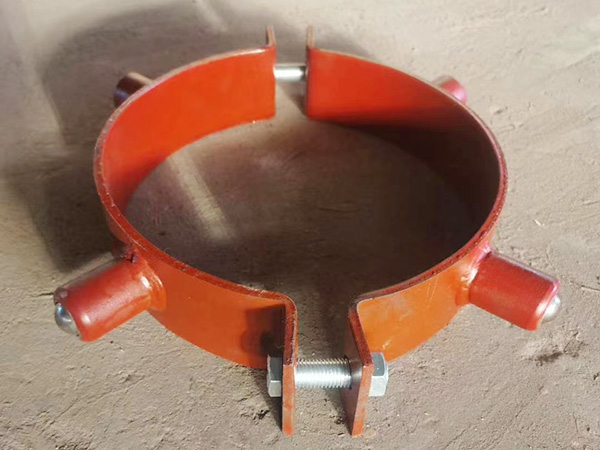

Raw Material Selection in a Pipe Clamp Factory
Every pipe clamp begins with carefully selected raw materials. Material choice determines strength, corrosion resistance, load capacity, and service life.
In a Pipe Clamp Factory, common materials include:
·Carbon steel for structural strength
·Stainless steel for corrosion resistance
·Alloy steel for heavy-duty applications
·Elastomer inserts for vibration control
Before entering manufacturer production, incoming materials undergo inspection for chemical composition, thickness tolerance, and mechanical properties. This ensures only qualified stock moves into the production line.
Material consistency is the foundation for batch manufacturing in any pipe clamp factory.
Cutting and Blanking Operations
Once materials are approved, they move into cutting and blanking stages. Sheets, strips, or bars are cut into predefined shapes according to clamp design.
Inside a Pipe Clamp Factory, this process uses:
·CNC laser cutting
·Stamping presses
·Shearing machines
Precision cutting ensures dimensional accuracy before forming begins. In structured factory production, automated equipment minimizes variation across large batch supply runs.
Accurate blanking improves downstream forming efficiency and reduces waste.
Forming and Shaping the Clamp Body
After cutting, blanks are shaped into clamp bodies. This step creates the curved profile that wraps around pipes.
A professional Pipe Clamp Factory applies:
·Cold bending
·Roll forming
·Hydraulic pressing
These methods shape metal while preserving material strength.
During manufacturer production, forming parameters such as pressure, speed, and die alignment are tightly controlled. This guarantees consistent geometry, ensuring that clamps fit pipes correctly during installation.
Welding and Assembly Processes
Many pipe clamps consist of multiple parts, such as two halves, threaded connections, or reinforcement plates. These components must be joined accurately.
In a Pipe Clamp Factory, assembly includes:
·Spot welding
·MIG/TIG welding
·Riveting
·Mechanical fastening
Controlled welding improves load capacity and structural integrity.
Through standardized factory production, welding quality is monitored to avoid cracks, misalignment, or weak joints in batch supply clamps.
Surface Treatment and Corrosion Protection
Surface finishing protects pipe clamps from corrosion and environmental damage.
Inside a professional Pipe Clamp Factory, finishing processes may include:
·Zinc plating
·Powder coating
·Galvanizing
·Passivation
These treatments improve durability, appearance, and chemical resistance.
In organized manufacturer production, coating thickness and adhesion are inspected to ensure long-term protection in different environments such as outdoor, industrial, or marine installations.
Adding Inserts and Functional Components
Some pipe clamps require rubber, EPDM, or polymer inserts for vibration damping and noise reduction.
A Pipe Clamp Factory integrates inserts during final assembly to:
·Protect pipe surfaces
·Absorb vibration
·Reduce sound transmission
·Improve grip stability
In controlled factory production, insert positioning and bonding are verified to ensure reliable performance under load and temperature variation.
Quality Control in Manufacturer Production
Quality control is embedded at every stage of production.
A professional Pipe Clamp Factory applies:
·Dimensional inspection
·Load testing
·Surface finish checks
·Visual defect detection
During manufacturer production, random sampling and batch verification ensure that each pipe clamp meets structural and functional standards before shipment.
Quality assurance protects downstream users from installation issues and premature failure.
Batch Supply and Packaging
After inspection, finished clamps are prepared for delivery.
Inside a Pipe Clamp Factory, packaging involves:
·Sorting by size and type
·Protective wrapping
·Labeling for traceability
·Palletizing for transport
With organized factory batch supply, large volumes of pipe clamps can be shipped efficiently to construction sites, distributors, and industrial users with consistent quality.
Batch packaging also helps maintain inventory accuracy and reduce damage during transportation.
Customization Capabilities
Modern projects often require non-standard solutions.
An advanced Pipe Clamp Factory offers:
·Custom diameters
·Special coatings
·High-load designs
·Temperature-resistant materials
Through flexible manufacturer production, clamps can be adapted for oil and gas, HVAC, chemical plants, power generation, and infrastructure projects.
Customization ensures clamps perform reliably under specific environmental and mechanical conditions.
Sustainability in Pipe Clamp Production
Sustainability is becoming a core focus in manufacturing.
Inside a Pipe Clamp Factory, sustainability measures include:
·Material utilization optimization
·Waste recycling
·Energy-efficient equipment
·Environmentally friendly coatings
Through modern factory production, resource consumption is reduced while maintaining product performance and quality.
This improves both environmental responsibility and long-term manufacturing efficiency.
Applications of Pipe Clamps
Thanks to structured production, pipe clamps from a professional factory are used in:
·Construction piping systems
·HVAC installations
·Industrial processing plants
·Water and sewage networks
·Energy and power facilities
A reliable Pipe Clamp Factory ensures each clamp supports pipelines safely and consistently across different applications.
Conclusion
Inside a professional Pipe Clamp Factory, every step from raw material inspection to final packaging is engineered for performance, consistency, and durability. Cutting, forming, welding, surface treatment, assembly, and quality control work together to transform metal into reliable pipeline support components.
With advanced manufacturer production systems and factory batch supply capability, a pipe clamp factory delivers consistent, high-quality products for large-scale and customized projects alike. Understanding this process helps buyers and engineers appreciate how a well-organized Pipe Clamp Factory ensures safe, efficient, and long-lasting pipeline support solutions from raw material to finished clamp.
References
GB/T 7714:Kalpakjian S. Manufacturing processes for engineering materials[M]. Pearson Education India, 1985.
MLA:Kalpakjian, Serope. Manufacturing processes for engineering materials. Pearson Education India, 1985.
APA:Kalpakjian, S. (1985). Manufacturing processes for engineering materials. Pearson Education India.
 Hot Products
 Contact Us
Contact:
Mobile:+86 +86 19133378808
Website:mingdepipe.com
Address: