Smart Pipe Support Systems: Integration with IoT Monitoring
Author:Mingde Time:2025-12-11 14:21:29 Click:150
Pipe Support Systems Enter the Intelligent Age
Pipe Support Systems have long been essential components in industrial, commercial, and processing environments. They stabilize pipelines, absorb vibration, accommodate movement, and maintain system integrity across a wide range of operating conditions. Today, as industries increasingly digitize their infrastructure, Pipe Support Systems are evolving from purely mechanical devices into intelligent, sensor-driven components that deliver insights as well as physical support.
The integration of IoT monitoring marks a major shift in how pipelines are supervised. Instead of relying solely on scheduled inspections or manual checks, facilities can now track pipeline behavior continuously. For operations handling bulk Production or Manufacturer-grade workloads, this digital transformation offers unprecedented advantages in reliability and operational foresight.
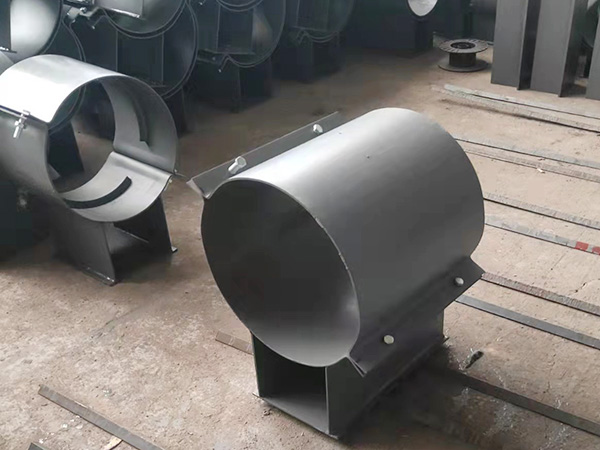
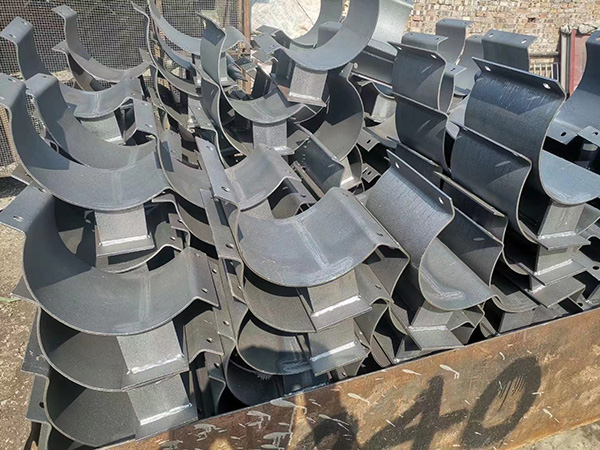
1. How IoT Transforms Traditional Pipe Support Systems
Smart Pipe Support Systems incorporate a network of sensors and communication modules that gather data from the pipeline and supporting structures. These systems monitor measurable conditions such as:
·Thermal expansion levels
·Dynamic vibration patterns
·Structural stress
·Load variations
·Pipe shifting or misalignment
The collected signals are transmitted to a centralized interface—either cloud-based or on-premise—providing real-time visibility across the entire pipeline network.
This live data eliminates many of the blind spots associated with conventional pipeline maintenance and allows engineers to make decisions based on current operating conditions rather than estimations.
2. IoT Monitoring: The Brain Behind Smart Support Infrastructure
2.1 Continuous Oversight and Data Flow
Sensors embedded within the Pipe Support Systems serve as constant observers, detecting fluctuations in temperature, force distribution, and motion. This continuous stream of information can detect subtle anomalies far earlier than routine inspections would.
Real-time alerts empower maintenance teams to intervene before minor irregularities develop into major failures, dramatically reducing operational risks.
2.2 Predictive Maintenance and Early-Warning Capabilities
One of the most impactful improvements IoT introduces is predictive maintenance. Instead of implementing fixed maintenance intervals, facilities can service pipelines precisely when data indicates a developing issue.
This approach minimizes unplanned shutdowns and extends the lifespan of both pipes and support structures—especially valuable in high-output Production environments, where downtime carries significant financial consequences.
3. Components Driving Smart Pipe Support Systems
3.1 High-Sensitivity Industrial Sensors
Modern sensors are compact, durable, and designed for challenging industrial conditions. They detect:
·Vibration amplitude
·Thermal gradients
·Axial load
·Micro-movements of the pipeline
Their high accuracy ensures that even minor shifts are captured and logged.
3.2 Wireless Network Integration
Smart Pipe Support Systems typically rely on secure wireless technologies including:
·Industrial Wi-Fi
·LoRa
·NB-IoT
·Mesh networking
These systems sustain reliable communication even in complex facilities filled with metal structures, pumps, and machinery.
3.3 Data Platforms and Visualization Panels
Analytics software converts raw sensor data into accessible dashboards and trend analyses. Engineers can review performance history, inspect graphs, set alarms, and generate reports. This digital ecosystem supports better traceability and more strategic planning.
4. Key Advantages of IoT-Enabled Pipe Support Systems
4.1 Higher Safety Across the Pipeline Network
By proactively detecting stress fluctuations, thermal expansion, and excessive loading, smart supports contribute significantly to operational safety. Early detection helps prevent pipeline deformation, leaking, or catastrophic structural failures.
4.2 Reduced Operating and Maintenance Costs
Predictive insights help avoid unnecessary maintenance and eliminate emergency repairs. The overall reduction in labor hours, downtime, and material waste leads to substantial long-term savings.
4.3 Reliable Performance for Large Manufacturer Operations
Facilities engaged in bulk Production benefit enormously from consistent monitoring. The stability offered by IoT-enhanced supports allows Manufacturer-level environments to maintain constant output with fewer interruptions.
4.4 Enhanced Documentation and Compliance
Digital logs produced by IoT systems simplify compliance reporting, maintenance documentation, and inspection records—ideal for industries with strict regulatory requirements.
5. Applications Across Multiple Industrial Sectors
5.1 Chemical and Petrochemical Processing
Pipelines carrying volatile materials face constant temperature fluctuations. Smart supports offer reliable monitoring to prevent stress-induced failures.
5.2 Energy and Power Systems
Steam lines, cooling loops, and high-pressure pipelines benefit greatly from continuous evaluation of thermal and vibration conditions.
5.3 Manufacturing and Industrial Lines
Production plants require uninterrupted flow of liquids and gases. IoT-integrated supports help maintain consistency and identify bottlenecks early.
5.4 Water and Wastewater Management
Treatment facilities use smart supports to track structural changes in large distribution pipelines and ensure long-term system resilience.
6. Why the Industrial Sector Is Moving Toward Smart Support Designs
The broader industrial landscape is shifting toward automation, remote oversight, and data-informed decision-making. Smart Pipe Support Systems align perfectly with these trends, offering:
·Better visibility
·Stronger operational control
·Scalability for high-volume pipelines
·Compatibility with modern digital infrastructure
For organizations managing large-scale Production or Manufacturer-driven logistics, adopting IoT-enhanced pipe support solutions is no longer a luxury—it is rapidly becoming an operational necessity.
Conclusion: The Future of Pipe Support Systems Is Smart and Connected
Pipe Support Systems are evolving into intelligent components that provide both structural stability and continuous digital oversight. Through IoT monitoring, industries gain real-time insights, predictive maintenance capabilities, and stronger system resilience, especially in environments driven by large-scale Production requirements.
As the industrial world advances toward smarter, more connected operations, IoT-enabled Pipe Support Systems stand out as a powerful solution for ensuring long-term efficiency, safety, and performance across diverse pipeline networks.
References
GB/T 7714:Goyal D, Chaudhary A, Dang R K, et al. Condition monitoring of rotating machines: a review[J]. World Scientific News, 2018 (113): 98-108.
MLA:Goyal, Deepam, et al. "Condition monitoring of rotating machines: a review." World Scientific News 113 (2018): 98-108.
APA:Goyal, D., Chaudhary, A., Dang, R. K., Pabla, B. S., & Dhami, S. S. (2018). Condition monitoring of rotating machines: a review. World Scientific News, (113), 98-108.
 Hot Products
 Contact Us
Contact:
Mobile:+86 +86 19133378808
Website:mingdepipe.com
Address: